 English
  Français
  Español

A green table that reflects your imagination
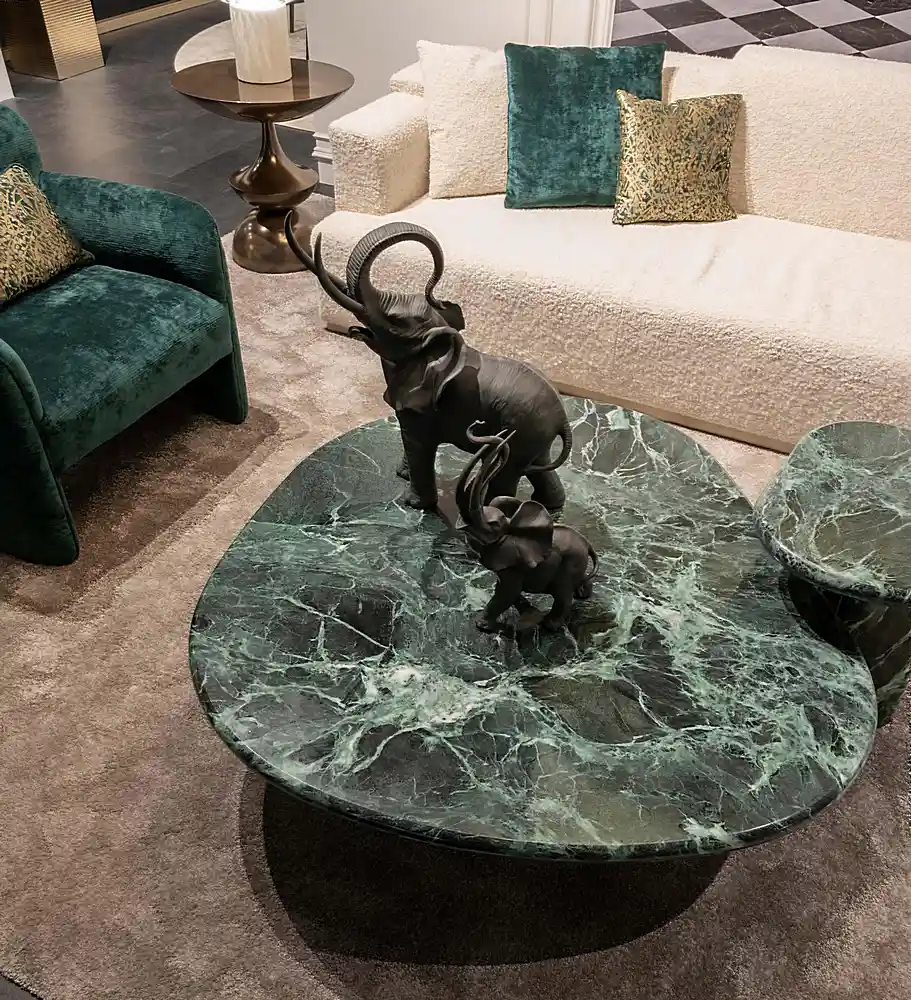
Table of Contents
- 1. Why choose a green table?
- 2. How to integrate a green table into your decor?
- 3. In which spaces should a green table be used?
- Why choose a table in green tones to decorate the places that matter to you?
- Integrate a green table into your dining room or kitchen
- Easily maintain a green table in the kitchen or dining room
- Highlight a green table in a living room or dining room
- Create a calming workspace with a green table in an office or meeting room
- Use a green table to decorate your garden or terrace
- 4. Types of materials for a green table
- Wood (painted, lacquered or stained)
- Metal (steel, aluminum, brass)
- Tinted or lacquered glass
- Natural stone
- Green marble from Campan (Hautes-Pyrénées, France)
- Green marble from Estours (Ariège, France)
- Sea green marble (Italy)
- Green marble from Prato (Italy)
- Maurin green marble (Alpes-de-Haute-Provence, France)
- Green marble from Sweden (Kolmården, Sweden)
- Saint-Denis Marble (France)
- Verde Alpi Marble (Italy)
- Guatemala Green Marble (Guatemala)
- Verde Pavone Marble (Italy)
- La Malachite
- Composite and innovative materials
- 5. How much does a green table cost?
- 6. How to choose the ideal green table?
- 7. What maintenance is required for an emerald table?
- Caring for an Emerald Wood Table
- Maintaining an Emerald Metal Table
- Caring for an Emerald Glass Table
- Maintenance of an emerald table in natural stone (marble, terrazzo, granite)
- What is the ecological impact of the products and which sustainable materials were favored in the design of your green furniture?
- 8. What shapes and sizes are available for my green table?
- 9. Finishes, textures and coverings of a green table
- 10. Green Tables Catalog
1. Why choose a green table ?
Symbolism of the color green
The color green: a subtle alliance between nature, balance and visual inspiration
Green, a hue at the crossroads of soothing blue and energizing, vibrant yellow, subtly embodies balance and renewal, as well as freshness. Its presence in nature makes it a color universally associated with life, growth, and harmony. It is a regenerative hue, which invites relaxation and inner calm, but also hope and mental freshness. There are therefore a wide variety of reasons revolving around your well-being for adopting a green color in your decorating choices and letting green tones reign supreme in your furniture.
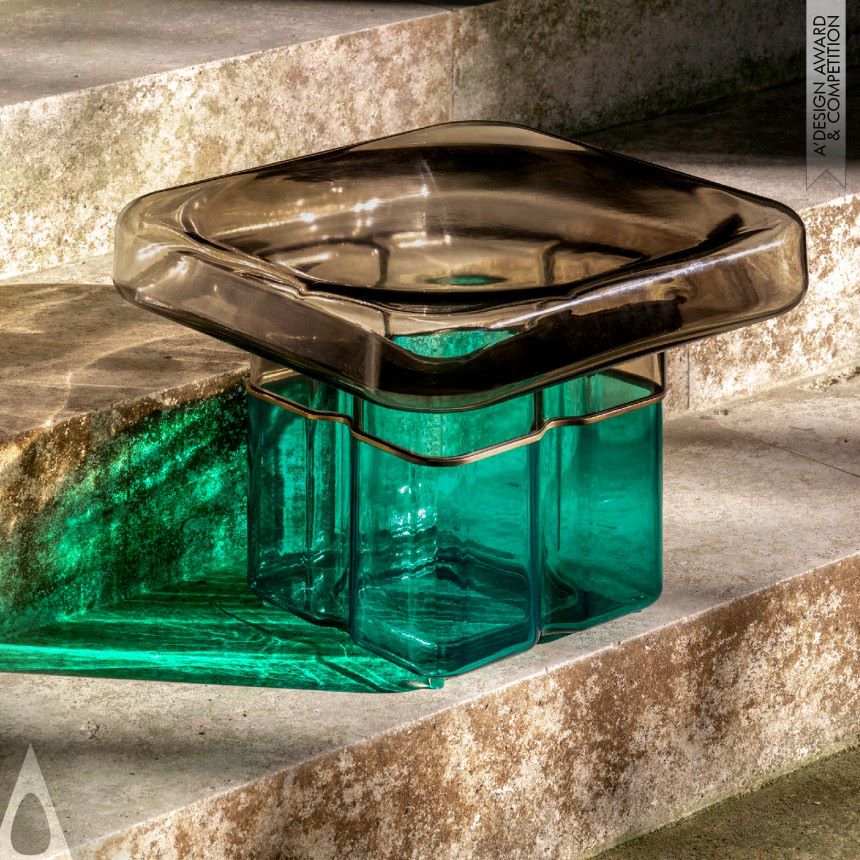
Aesthetics, originality and visual well-being
The color green is a chameleon hue that encourages unbridled creativity.
Aesthetically, green charms with its richness in terms of colors: from olive green to emerald green, not forgetting mint or forest green, it offers a range of shades as varied as they are refined. Used with finesse, the color green brings a discreet but captivating note of originality. Green transcends the predominant conventions of primary or warm colors, asserting its position as a bold alternative, both modern and timeless.
Green, a naturally calming color, offers real visual comfort by soothing the eye and creating a tranquil atmosphere in your living space.
From a sensory perspective, green is often considered one of the most soothing hues for human vision. It creates a sense of natural depth without being intrusive, and encourages reflection. For this reason, it is commonly preferred in environments dedicated to concentration, meditation, or creativity: it stimulates calm without dulling the mind.

2. How to integrate a green table into your decor?
Decorating ideas with a green table in a modern interior
Bet on neutral contrasts
Pairing a green table with white, light gray, or beige walls highlights its color without weighing down the space. Green, representing nature and harmony, pairs perfectly with materials such as polished concrete, marble, or light wood.
Manipulating textures
To enhance the table’s sophistication, frame it with dark gray velvet or black leather chairs, add a textured rug in neutral tones, and opt for minimalist metal lighting. The chic and harmonious effect of the green table combined with these modern textures creates a striking contrast.
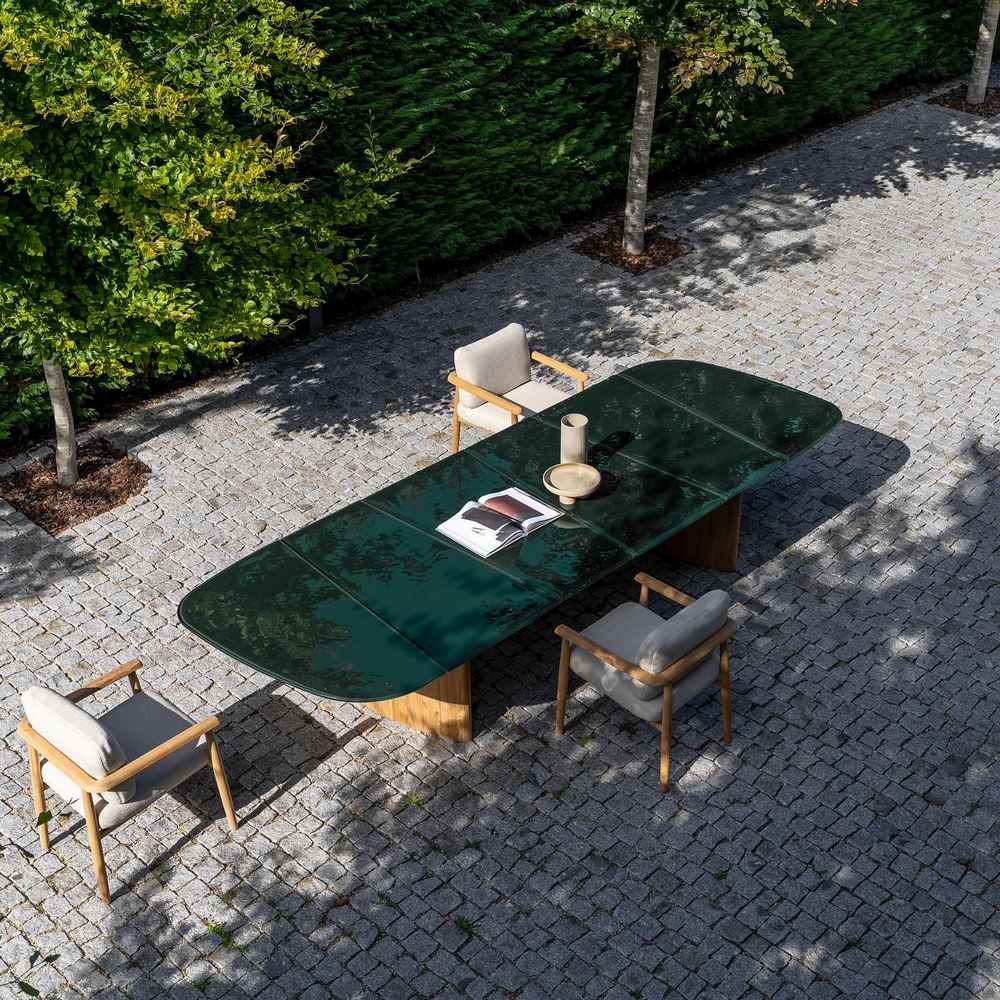
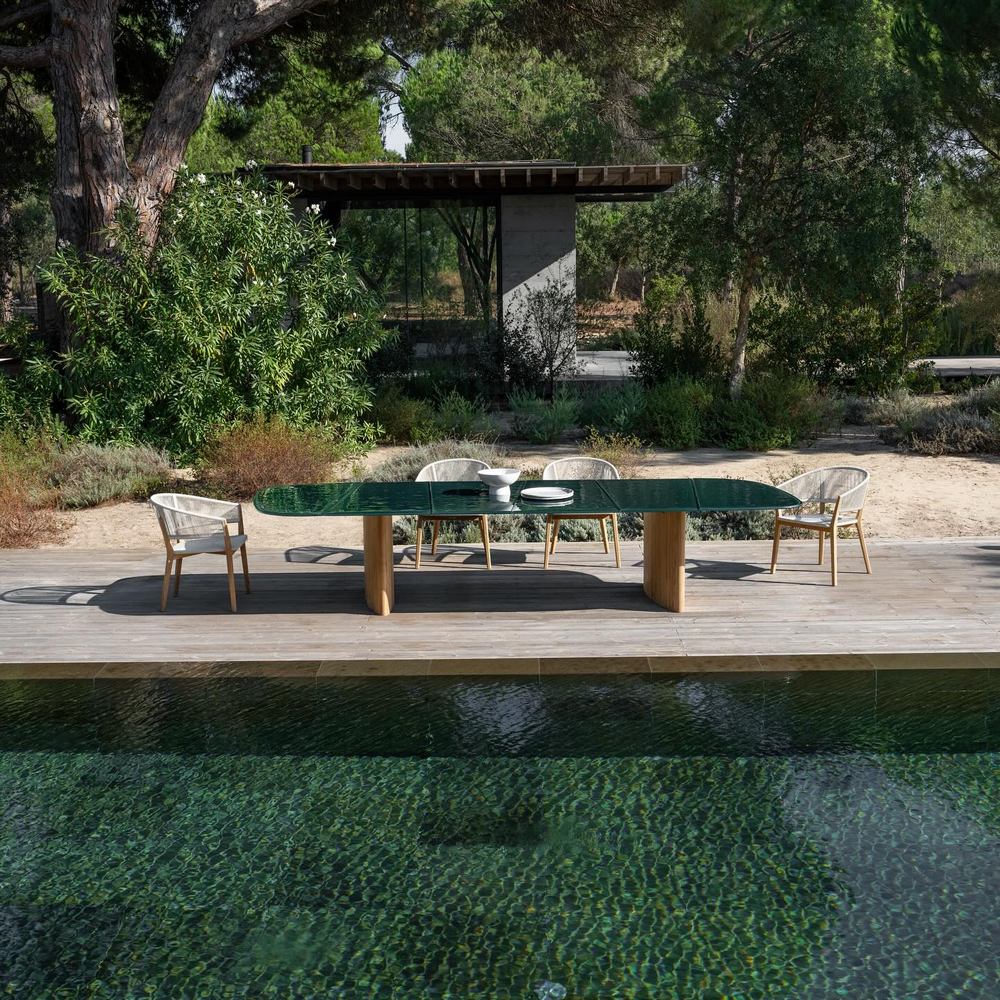
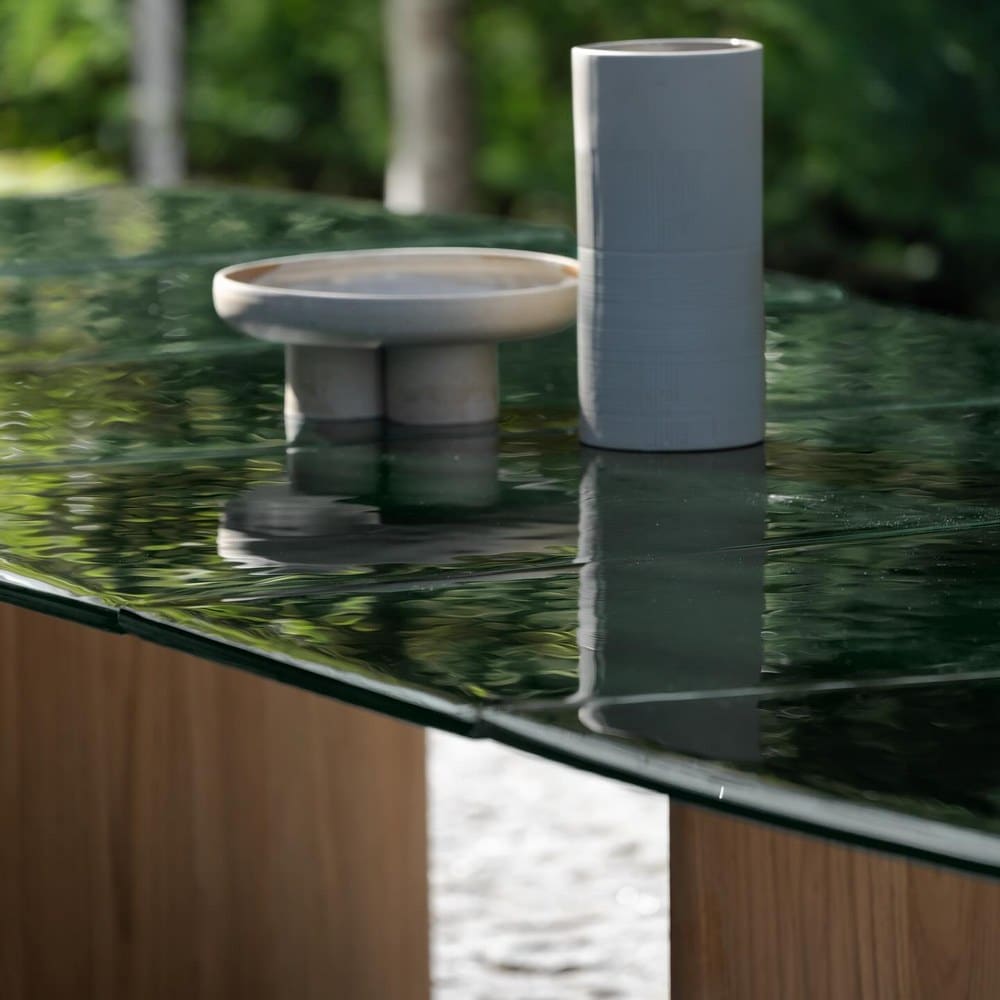
Incorporate plant elements
The lack of greenery on the table can be subtly evoked by indoor plants: ferns, monstera, or succulents arranged on floating shelves or as a centerpiece. These botanical elements accentuate the peaceful and natural atmosphere of the space.
Add depth to the style with decorative elements
In a modern interior, a green table blends perfectly with contemporary-style elements: sleek ceramic vases, geometric candelabras, or even a white or gold dinner service that creates a chic contrast with the green.
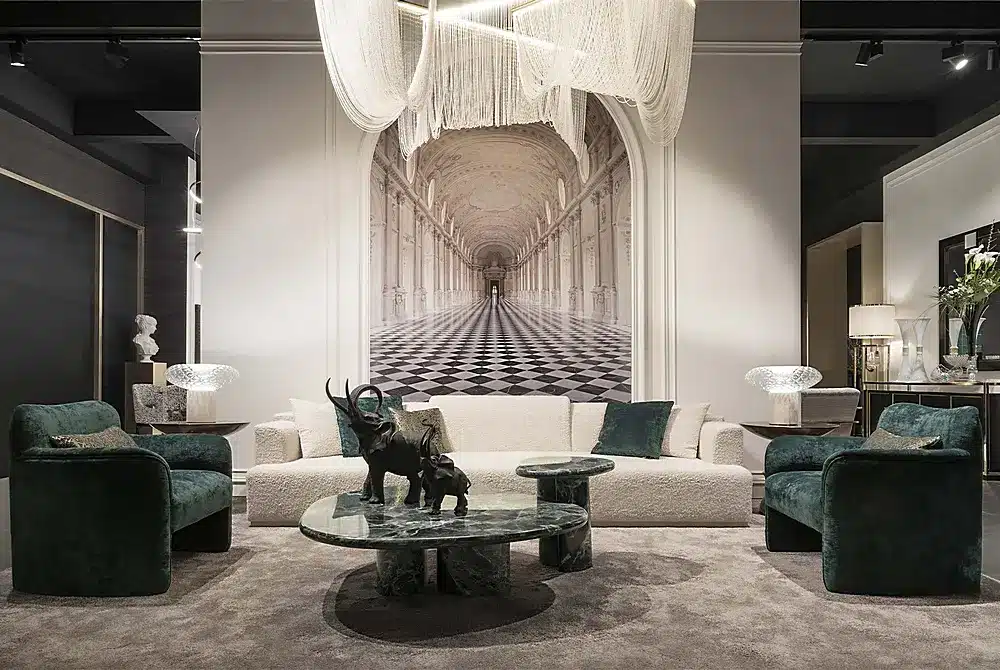
A classic-style green table (Louis XV, Louis XVI) will most often feature a malachite top. Empire-style statues or decorations (Napoleonic campaigns) will perfectly complement this antique-style setting, where bronze and/or brass should be favored without moderation.
Dare to use tone-on-tone shades or monochromes (gradients)
For those who dare, a monochrome design featuring various shades of green can create a unique and inviting ambiance. For example, pair an emerald green table with sage or olive green decor for a harmonious and delicate ensemble.
Pairing a green table with a classic or traditional style
In a traditional or classic setting, a green table can seem bold… But when properly integrated, it becomes a key element that adds character without compromising the timeless elegance of the decor. All you need to do is experiment with the right materials, shades, and accessories.
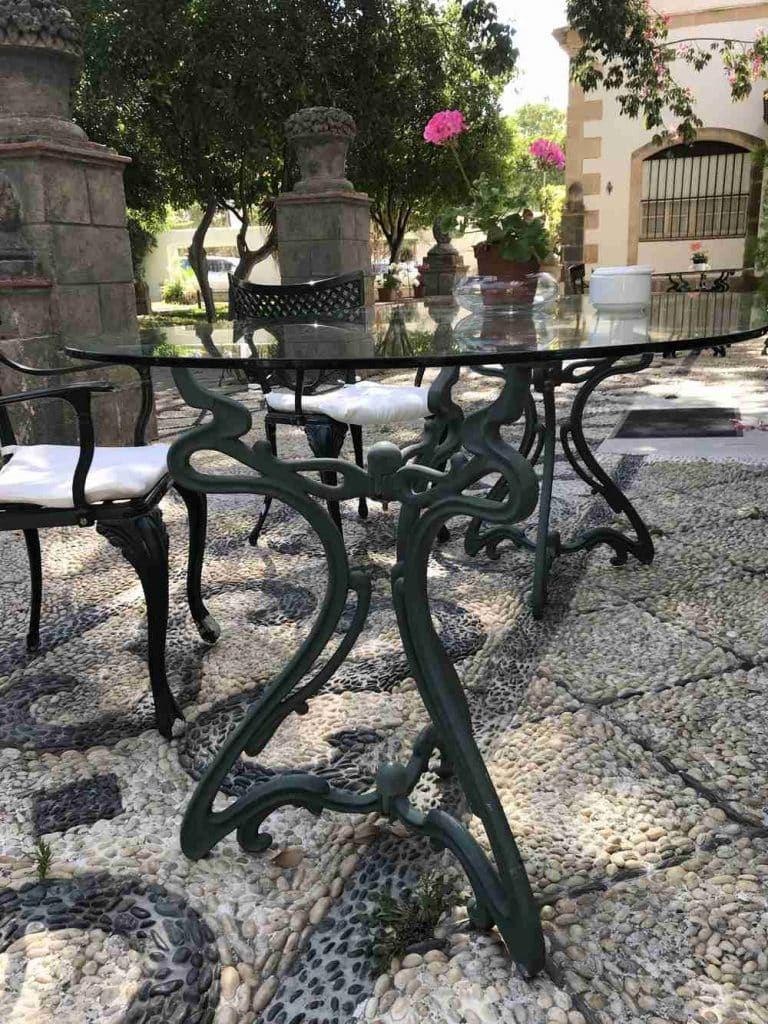
Bet on an intense and refined shade of green
In keeping with the traditional style, opt for refined shades of green such as forest green, olive green, or bottle green. These deep hues evoke the subdued atmosphere of period living rooms or antique libraries.
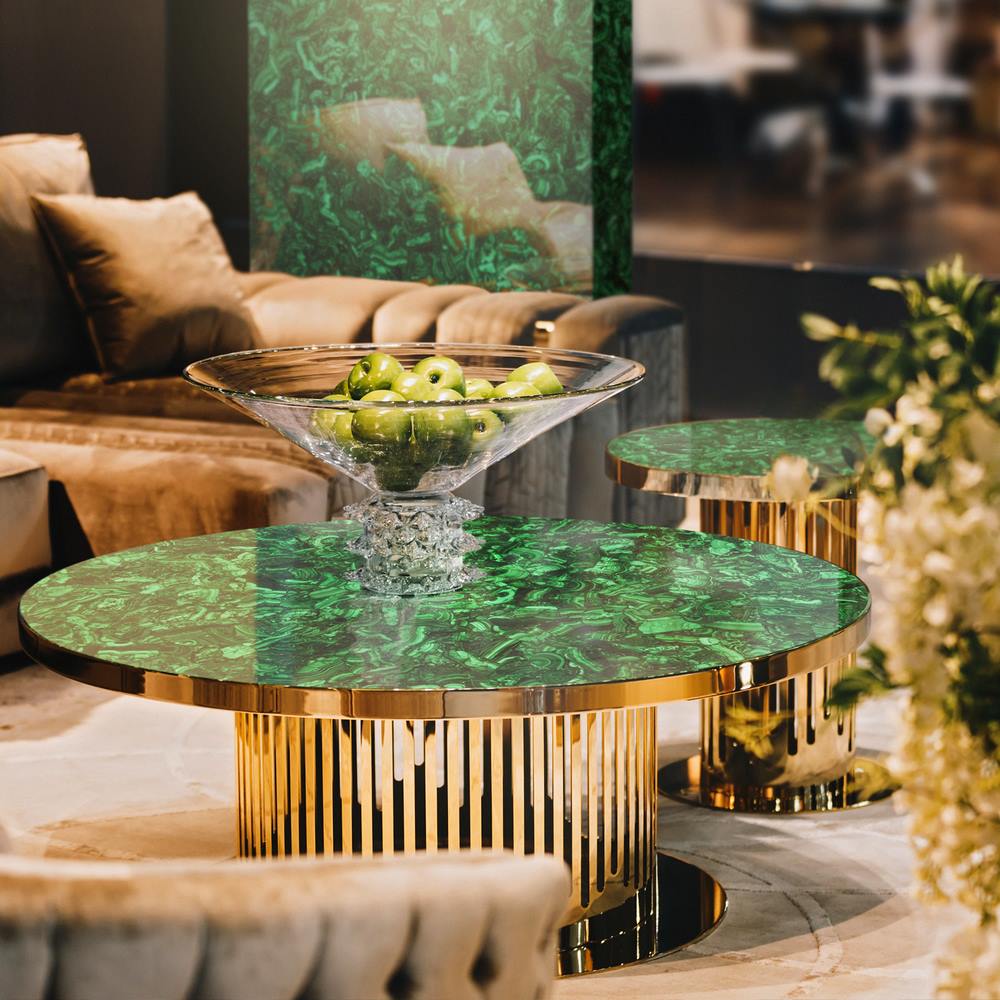
How to create a harmonious atmosphere around a green table (chairs, walls, accessories)?
For a harmonious atmosphere around a green table, choose chairs in light wood or black metal to contrast elegantly:
- Paint the walls in neutral tones (beige, light gray) or a softer green to create depth.
- Incorporate natural accessories: plants, ceramic vases, linen tablecloths.
- Use gold or brass touches (lighting, cutlery) to warm up the whole thing.
- Choose soft lighting for a friendly atmosphere.
From a sensory perspective, green is often considered one of the most soothing hues for human vision. It creates a sense of natural depth without being intrusive, and encourages reflection. For this reason, it is commonly preferred in environments dedicated to concentration, meditation, or creativity: it stimulates calm without dulling the mind.
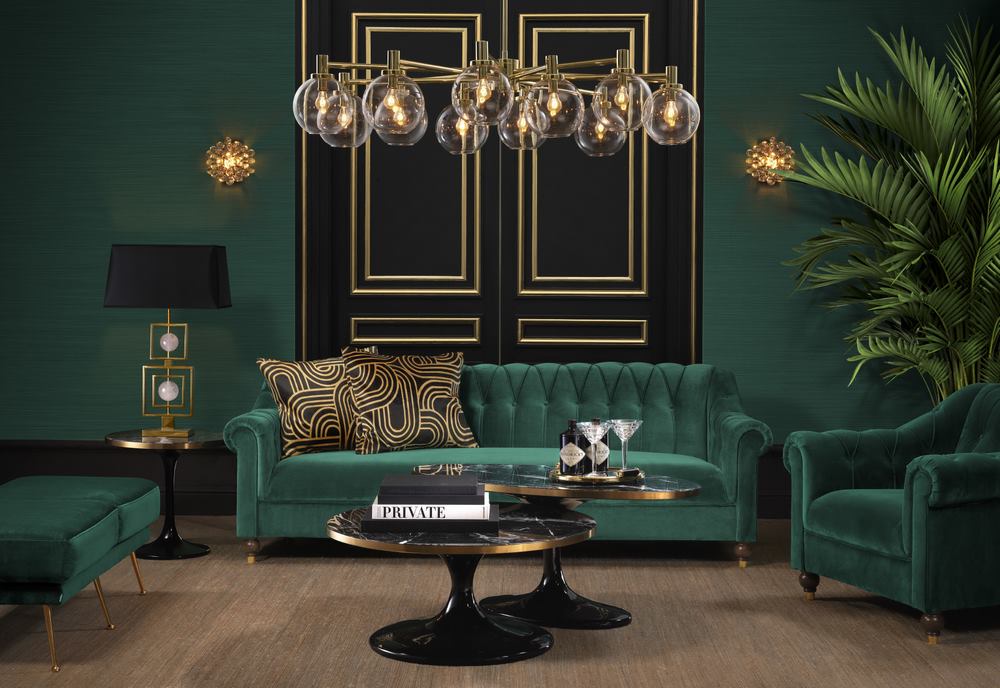
3. In which spaces should a green table be used?
Why choose a table in green tones to decorate the places that matter to you?
A green table is indeed a piece of furniture that has the ability to reflect the personality of its inhabitant. Inspired by nature, green stands out as a shade of choice for designing an interior conducive to well-being. A true breath of fresh air, it infuses vitality and serenity into the space it inhabits. Thanks to its close connection with natural elements, green creates a harmonious, soothing, and balanced atmosphere. It is also credited with relaxing properties, notably its ability to reduce stress and promote a climate of deep relaxation.
Integrate a green table into your dining room or kitchen
A green table transforms your dining room or kitchen into an elegant and inviting space. Its unique color and varied materials adapt to different decorating styles. Whether made of wood, metal, glass, or natural stone, a green table brings freshness and dynamism. Here are some ideas for integrating it harmoniously into your home.
Choosing the right material for the space
Green symbolizes nature and freshness, enhancing a table when well-matched to the material and location. A soft green on a light wood surface creates a calming atmosphere in bright or green spaces. A deep green on dark wood or metal adds character and evokes dense forests. Outdoors, a UV-resistant green finish on materials such as powder-coated metal or treated wood blends perfectly into gardens or patios. Choosing the right shade of green, whether matte or satin, helps balance aesthetics, durability, and harmony with the space.
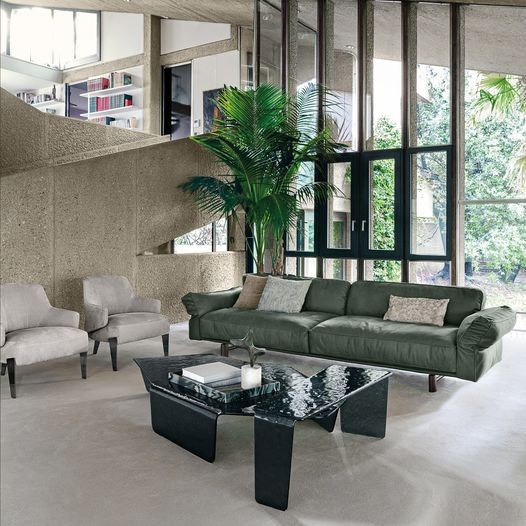
Create harmonious contrasts with surrounding colors
One of the keys to incorporating a green table into your dining room or kitchen is choosing the right colors for the walls, flooring, and other decorative elements. Willow green is a calming and refreshing color that pairs well with a neutral color palette like white, gray, or beige. If your walls are in light tones, a green table can really stand out while creating a soft, pleasant contrast.
In a modern kitchen, pastel-colored walls or even touches of natural wood can complement a metal or emerald-tinted glass table. For a bolder feel, you can opt for walls in deep shades of blue or navy, which will bring out the intensity of the green color. In a dining room, a jade-colored wooden table can be paired with chairs in natural colors, such as off-white or taupe, for a warm yet elegant ambiance.
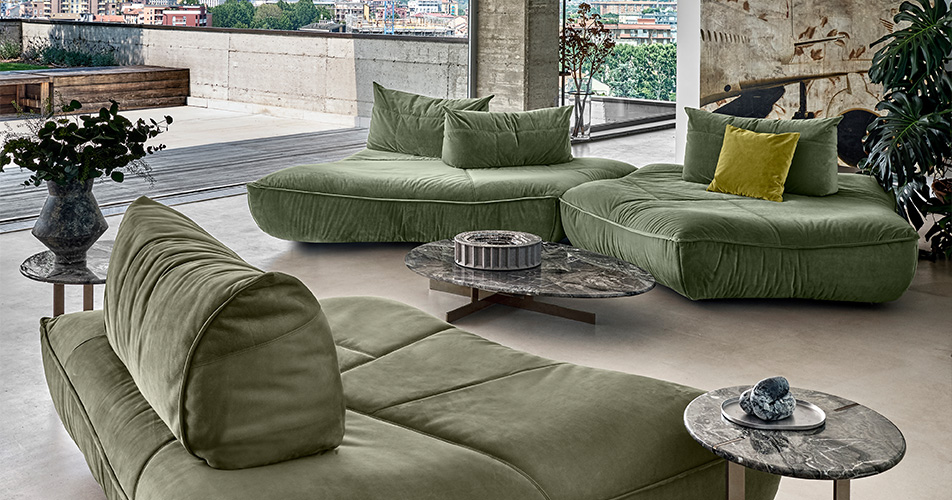
Harmonize with accessories and decorative objects
To complete your green table setting, it’s important to choose the right accessories and decorative items. Neutral tablecloths or placemats in shades like white, gray, or beige will enhance the color of the table without overwhelming it. Depending on the desired style, you can use decorative elements like vases, lamps, or bowls made of metal, wood, or ceramic for a harmonious effect. In a dining room, beautiful crystal or gold candles will add a touch of luxury while creating a chic and soothing atmosphere. In the kitchen, fresh herbs in white ceramic pots or modern kitchen utensils with gold or metallic accents will create a pleasant and modern contrast.

Adapt the table to the size of the space
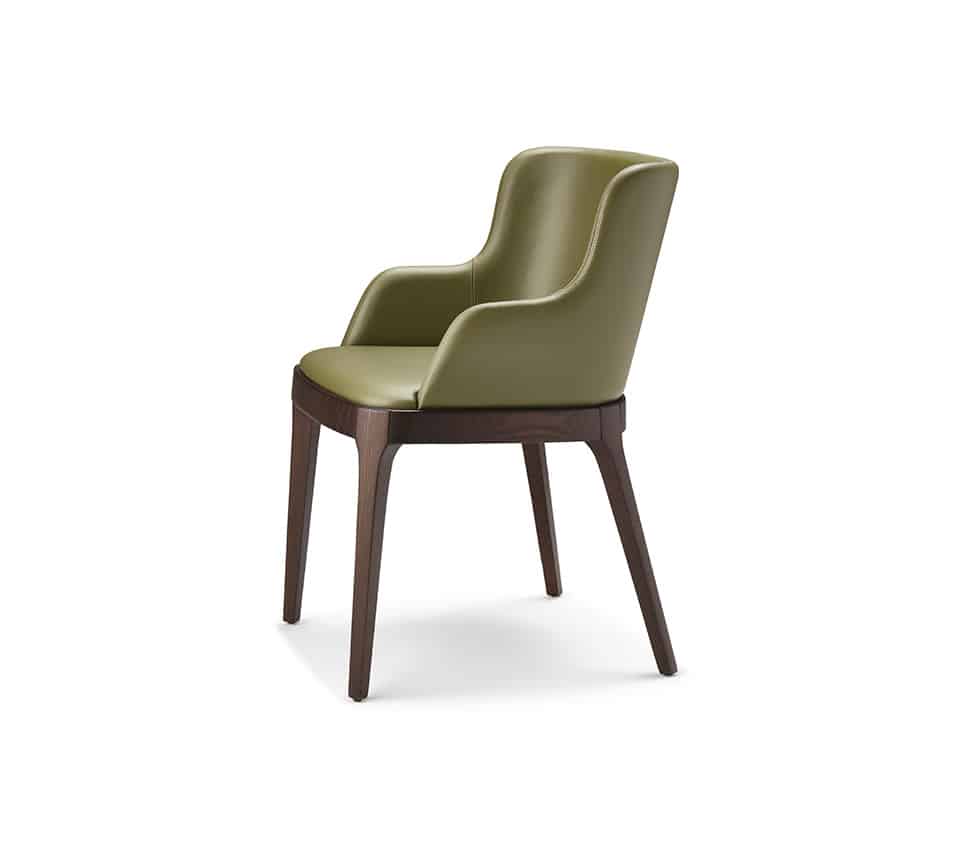
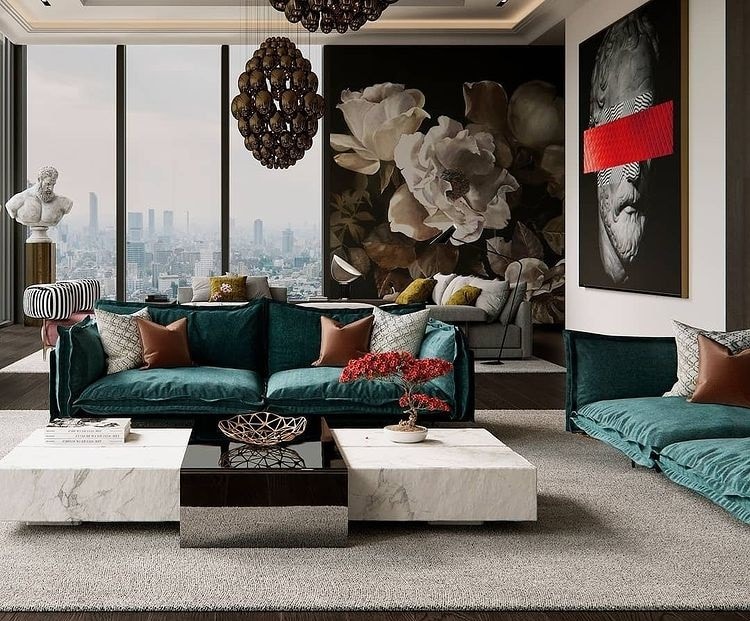
When incorporating a jade table into your dining room or kitchen, it’s essential to consider the size of the room. For a small dining room, opt for a round or square table, which creates a welcoming space without overwhelming the atmosphere. A table with a green glass top will create a sense of lightness, while a metal or ceramic table can have a more robust structure that blends harmoniously into a larger space.
In an open-plan kitchen, a green table can serve as a focal point, but it must also be functional and adapt to the available space. A folding or extending table can be a practical choice, allowing you to optimize space without compromising aesthetics. If the space is very large, a table made of natural jade stone, such as marble or terrazzo, can offer a spectacular visual impact and become the key element of the room.
Easily maintain a green table in the kitchen or dining room
Choosing an easy-to-maintain green table is especially important in the kitchen, where spills, grease, and heat are major concerns. Opt for durable materials like lacquered metal, laminate, or FENIX, which are not only aesthetically pleasing, but also practical and easy to clean. A tinted glass or ceramic table will also be very easy to maintain. Be sure to protect the table from acidic spills, especially if you choose more sensitive materials like marble or wood.
Highlight a green table in a living room or dining room
In a living room, a green table, whether coffee, side, or dining, creates a subtle contrast that draws the eye while blending naturally into the decor. This color evokes calm and balance, making it an ideal choice for relaxation areas. It can be enhanced with neutral textiles, brass elements, or indoor plants to enhance the natural effect. Green adds a unique dimension without disrupting the overall harmony. It thus becomes a piece that is as decorative as it is functional.
Create a calming workspace with a green table in an office or meeting room
Green is known for its calming properties and ability to reduce eye strain, making it an excellent option for workspaces. Incorporating a green table into an office or meeting room helps create an environment conducive to concentration and creativity. Combined with soft lighting and natural materials, it promotes a serene atmosphere, far removed from daily stress. Whether used as an individual workstation or a collaborative table, it adds a touch of character while also serving ergonomics.
Use a green table to decorate your garden or terrace
Outdoors, a green table blends harmoniously into its surroundings while asserting a bold and refreshing style. On a wooden deck, an urban balcony, or in the heart of a garden, it establishes a direct connection with the surrounding vegetation. Weather-resistant when designed with suitable materials (aluminum, treated steel, painted wood), it combines functionality and aesthetics. It can be paired with colorful or natural seating to create a welcoming and sophisticated dining area. An ideal choice for extending nature into your moments of relaxation.
4. Types of materials for a green table
Tables with a green finish can be made from a variety of materials, each offering a unique look that highlights the originality of the piece.
Wood (painted, lacquered or stained)
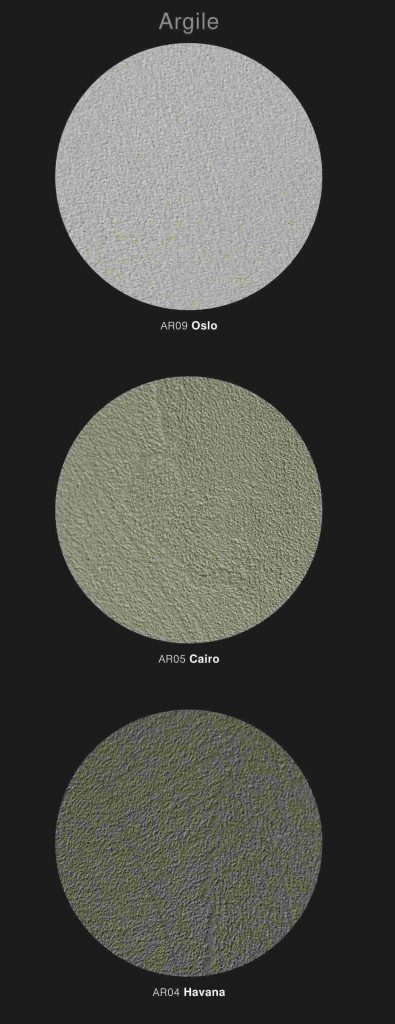
Wood, when painted, lacquered, or stained green, offers a perfect balance between natural and bold. Warm by nature, it retains its lively character thanks to its visible veins and textures, while adorning itself with an original color that brings freshness and personality to the space. Green, in its many shades from soft sage to deep forest green, allows you to create soothing or dynamic atmospheres. Easy to integrate, a green wood table adapts to a wide range of styles, from revisited rustic to refined contemporary, while retaining the authentic charm of solid wood.
Metal (steel, aluminum, brass)
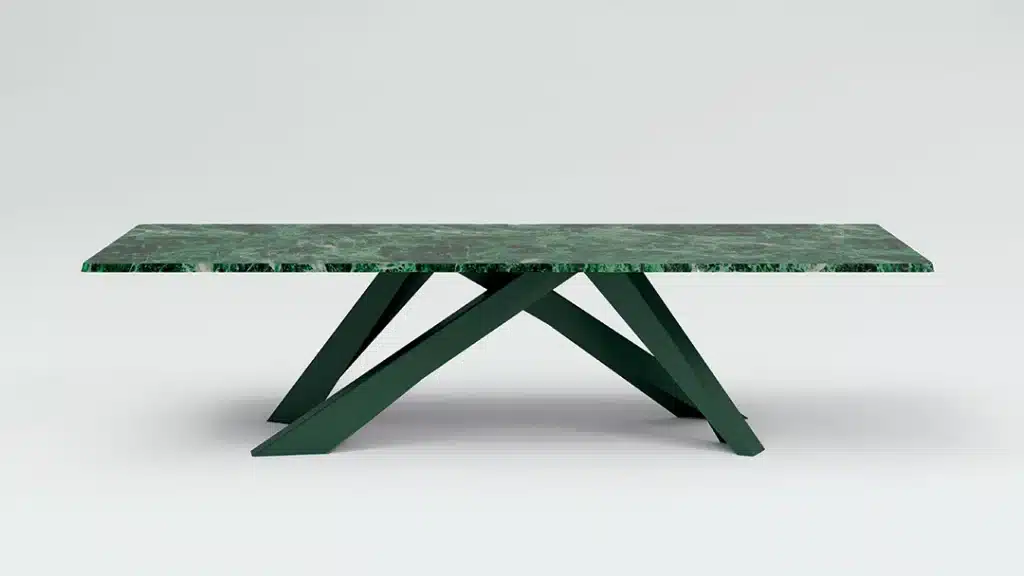
A green metal table captivates with its bold silhouette and decidedly modern style. Strong, durable, and easy to maintain, metal lends itself particularly well to color, offering matte, satin, or glossy finishes depending on the desired effect. Painted green, the metal structure gains originality while maintaining a simple, graphic appearance. This combination works equally well in an industrial interior as it does in a more refined or designer decor. The table then becomes a centerpiece that combines robustness and boldness, perfect for asserting a strong decorative identity.
Tinted or lacquered glass
Green tinted or lacquered glass brings a touch of modernity and sophistication to any interior. Thanks to its glossy surface and transparency, it reflects light and creates color effects that energize the space. Ideal for contemporary settings, it blends perfectly into sleek decors while adding a subtle sparkle. The lacquered or tinted finish allows you to adjust the shade of green to achieve the desired atmosphere, ranging from a delicate and soothing hue to a deeper and bolder color, while remaining refined and easy to combine with other materials.

Natural stone
Green natural stone tables, like marble, come in several shades, each with unique characteristics. Terrazzo or green granite bring timeless elegance to any interior thanks to their rich textures and unique mineral patterns. These materials, marked by their natural veining and visual depth, transform a simple table into a true work of art. Green marble, with its delicate patterns and subtle reflections, creates an atmosphere that is both opulent and relaxing. Terrazzo, with its colorful reflections and graphic appearance, contrasts with green granite, which exudes a noble robustness. Even rarer, malachite, a semi-precious stone with a vibrant green veining, is generally intended for luxury items or artistic furniture. It adds an element of prestige and exceptionality, ideal for enhancing the elegance of a refined space.
Green marble from Campan (Hautes-Pyrénées, France)
Green Campan marble is a precious stone extracted from quarries located in the upper Adour Valley, in the Hautes-Pyrénées. Known for its dark and particularly pronounced veins, this marble was widely used in the decoration of facades of historic monuments, particularly during the reign of Louis XIV. It adorns prestigious sites such as the Palace of Versailles, illustrating its major role in 17th-century architecture.
Green marble from Estours (Ariège, France)
Estours green marble, quarried in the Haut-Salat Valley near Seix, Ariège, is renowned for its ivory base interspersed with undulating green veins, creating a unique and elegant contrast. This historic stone, used since ancient times, has decorated many prestigious monuments, including the church of Salau and the cloister of Saint-Lizier Cathedral. In the 19th century, it was particularly prized for the manufacture of fine furniture and was exported as far away as Japan, demonstrating its international appeal.
Sea green marble (Italy)
Sea green marble, also known as Genoa green, is a natural stone of serpentine origin, recognizable by its dark green hue dotted with varied shades evoking the movements of water. Its fluid veining, reminiscent of sea waves, gives it an organic and lively appearance. Used since the Baroque era, this decorative marble has enhanced historic buildings such as the Palace of Versailles and the Cathedral of Santa Maria del Fiore in Florence. Today, it remains a popular choice for interior designs with a classic and refined character.
Green marble from Prato (Italy)
Green Prato marble, sourced from Tuscan quarries in the Prato region of Italy, is a prestigious natural stone known for its consistent green hue and delicate veining. Sought after for its understated and sophisticated aesthetic, this Italian marble blends perfectly into high-end interior design projects. It is particularly used for elegant flooring, wall cladding, and decorative elements that require a touch of refinement and authenticity.
Maurin green marble (Alpes-de-Haute-Provence, France)
Maurin green marble, extracted from Alpine quarries near the hamlet of Maurin in Saint-Paul-sur-Ubaye, is distinguished by its exceptional mineral richness, particularly in chlorite and serpentinite. Its intense dark green color and natural brilliance make it an exceptional stone, chosen to adorn emblematic buildings such as the Opéra Garnier in Paris or the Notre-Dame de Fourvière basilica in Lyon. This French marble, both noble and rare, is particularly prized in prestigious architectural projects and high-end decorative projects.
Green marble from Sweden (Kolmården, Sweden)
Originating from the famous Kolmården quarries, Swedish green marble captivates with its exceptional robustness and its range of greens, from delicate olive to deep, almost black shades. This high-quality natural stone has graced prestigious buildings such as the Stockholm Royal Palace and City Hall. Appreciated for its timeless elegance, this Nordic marble is nevertheless sensitive to the elements, making it a material of choice for interior design, luxurious flooring, and sophisticated wall cladding.
Saint-Denis Marble (France)
Saint-Denis marble, extracted from quarries located in the Île-de-France region, is a natural stone prized for its delicate green color, dotted with white and gray veins that give it a refined and elegant appearance. Used since ancient times, it has decorated iconic monuments such as the Basilica of Saint-Denis, illustrating its historical and architectural importance. Today, this marble is often chosen for high-end projects, particularly for flooring, kitchen countertops, and interior decorative elements.
Verde Alpi Marble (Italy)
Verde Alpi marble, quarried in the Italian Alps, is a spectacular natural stone, renowned for its intense green color and striking contrasting white or gold veining. This marble is often used in luxury applications, including wall cladding, flooring, and furniture. Its Alpine origins give it a dense texture and exceptional durability, making it a popular choice for prestigious architectural projects and modern and classic interior design.
Guatemala Green Marble (Guatemala)
Guatemala Green marble, quarried in Guatemala, is a natural stone remarkable for its intense emerald green coloration, punctuated by white and gold veining. This exotic marble is prized for its unique beauty and strength, making it an ideal choice for luxury interior design projects, including flooring, countertops, and decorative elements. Its brilliance and intensity also make it a popular material for exterior surfaces in high-end architectural environments.
Verde Pavone Marble (Italy)
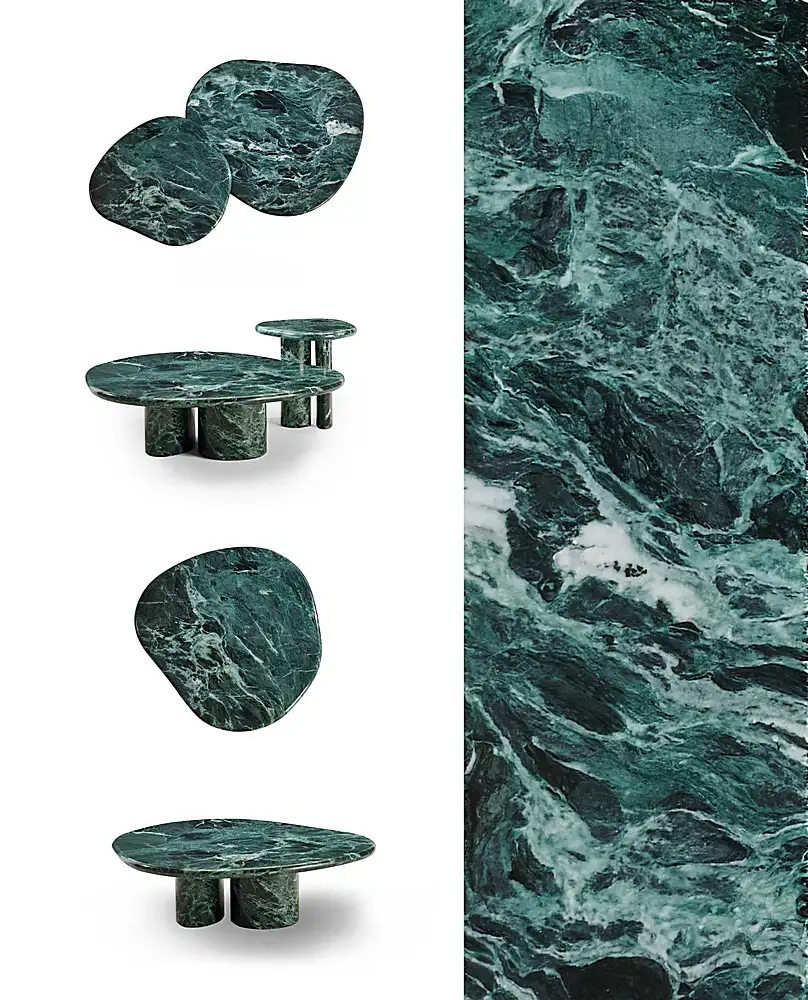
Verde Pavone marble, sourced from Italy, is a refined natural stone known for its concentrated green tones, blending deep shades with irregular veining ranging from off-white to bluish-gray. Its name, meaning “peacock green,” evokes the elegance of its patterns reminiscent of the bird’s plumage. This unique marble is particularly popular in prestigious interior design and decoration projects. It is commonly used for wall cladding, countertops, floors, and luxurious bathrooms, where it adds depth and character.
La Malachite
Malachite is a fascinating ornamental stone, recognizable by its intense shades of green and distinctive concentric patterns, ranging from light to deep green. Used since ancient times, this natural gemstone owes its name to the ancient Greek malakhé , a reference to the color of mallow leaves. Its vibrant appearance and natural undulations evoke mineral landscapes in constant motion. Highly prized in decorative arts and luxury crafts, malachite is frequently used to create decorative objects, jewelry, and refined architectural elements. Its visual richness makes it a preferred choice for bringing a touch of elegance and mystery to sophisticated interiors.
Composite and innovative materials
Innovative composite materials such as laminate, resin, FENIX, and ceramic offer an ideal solution for modern green tables. These materials are not only durable and resistant, but also easy to maintain, making them a practical choice for everyday use. Available in a wide range of green shades, they allow for extensive customization while providing a contemporary and refined look.
Green glazed porcelain stoneware
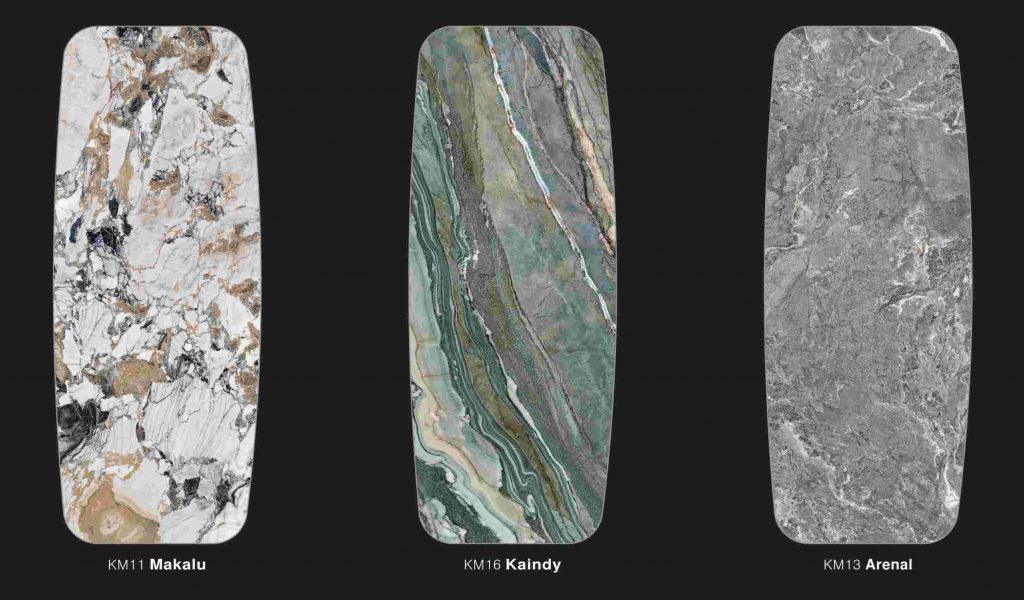
Green glazed porcelain stoneware is one of the most durable materials for a tabletop. It is made from a blend of natural raw materials that are dry-pressed and fired at very high temperatures, giving it excellent resistance to impact, scratches, stains, heat, and even frost. It is available in matte, satin, or glossy finishes, with varying shades of green ranging from olive green to emerald green. This material is ideal for indoor or outdoor tables, including high-traffic environments such as kitchens and patios.
Green glazed earthenware
Green earthenware is a softer ceramic, made from white clay covered with a colored glaze. It offers a shiny and decorative appearance, often used for patterns or painted tiles. However, it is more fragile than stoneware: it does not withstand impacts and scratches well. It is more suitable for decorative tabletops, such as a side table, console table, or low furniture, rather than a dining table.
Green glazed terracotta
Glazed terracotta is a handcrafted ceramic with a rustic charm. It is generally made from red or white clay, then covered with a glossy or matte green glaze. This ceramic exudes a strong personality and gives a table a Mediterranean or bohemian feel. It is moderately resistant to stains and moisture if well glazed. It is ideal for an indoor table with moderate use, especially when combined with a wooden or wrought iron structure.
Green glazed porcelain
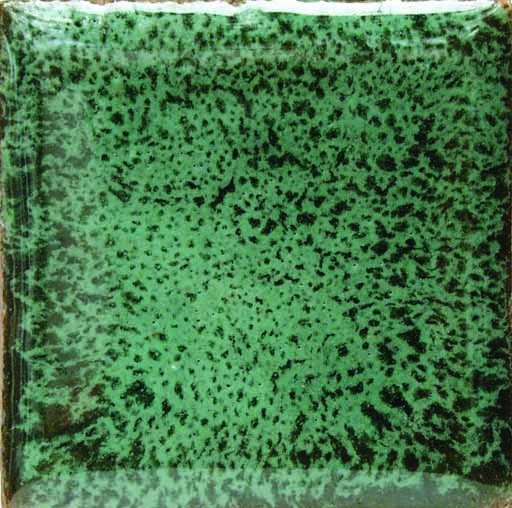
Green porcelain is a fine, dense, and very aesthetic ceramic. It offers a refined, often smooth and shiny appearance, and allows for very delicate green colors like celadon or jade. Although it is resistant to heat and stains, it can crack under sudden impact. It is perfect for an elegant table, a coffee table, a side tray, or for decorative use. For a main tray, it requires protection (glass or a frame) if it is used frequently.
Le Fenix
FENIX, with its matte, anti-fingerprint surface, and resin, which allows for smooth, elegant finishes, are particularly prized for their modern aesthetic and resistance to scratches and impacts. These materials combine innovation, style, and functionality in a minimalist or urban interior design that is constantly evolving. Green shades like Verde Comodoro and Kitami are a way to incorporate green into your furniture by choosing a modern material.
5. How much does a green table cost?
How do green table prices vary depending on the materials used, such as wood, stone, metal, or glass?
The choice of material is a determining factor in the price variation of a green table. Beyond the aesthetics of the color, the structure of the furniture—wood, stone, metal, or glass—also influences the final cost, due to the manufacturing processes, specific finishes (tints, lacquers, UV-resistant treatments), and expected durability.
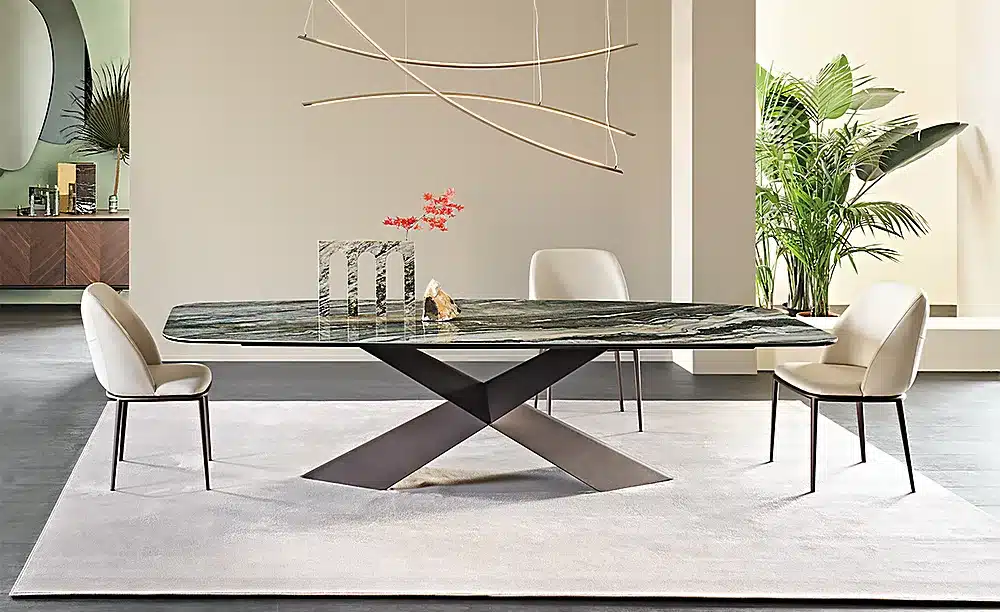
A green solid wood table, for example, will require quality staining or painting to preserve the material while ensuring a uniform color. Conversely, metal can be powder-coated green with an excellent finish at a lower cost, ideal for contemporary interiors or outdoor use. Green colored or screen-printed glass, which is more difficult to produce, is generally part of a more high-end design range. As for stone, it represents the most luxurious option, with custom treatments to incorporate a green tint without losing the nobility of the material. This option naturally requires a larger budget.
Price according to the use of the table (indoor, outdoor, professional)
The price of a green table varies significantly depending on its intended use. A table designed for a private home will not have the same technical requirements or the same level of finish as a table intended for outdoor use or a professional environment (restaurants, offices, communities). Indoor models often focus on aesthetics and design, with materials such as wood or lacquered MDF. For outdoor use, it is essential to opt for weather-resistant finishes (powder coating, water-repellent treatments, stainless materials). For professional use, robustness, ease of maintenance, and compliance with intensive use standards drive up prices, while ensuring optimal durability.
6. How to choose the ideal green table?
In addition to its unique look, the greenish table now boasts clever features that make it particularly suitable for modern spaces. Here are the key innovations that make this piece of furniture both practical and versatile:
What functional innovations make a greenish table even more practical?
Folding or folding mechanisms
Some green tables feature folding tops or retractable legs. This makes them easy to store when not in use, which is particularly beneficial in tight spaces or for occasional use.
Extendable mechanisms equipped with extensions
Many models offer extendable tops to accommodate the number of people. The extensions can be integrated under the top or added manually. This feature makes it easy to convert a compact table into a spacious reception table without any hassle.
Height-adjustable trays
Some tables offer the ability to adjust their height using a mechanical or jack system. This adjustment allows you to switch from a coffee table to a dining table as needed, thus offering great flexibility of use.
Built-in storage
Discreet compartments, drawers, or hidden storage spaces beneath the tabletop allow you to store cutlery, placemats, or small everyday items. This integration promotes organization without compromising aesthetics.
Easy mobility
Lockable casters can be added to allow the table to be easily moved, while ensuring perfect stability once in place. This makes the table convenient to move from one space to another.
Technical and easy-to-maintain materials
New green tables often use materials that are resistant to scratches, heat, and moisture. Matte or satin finishes reduce fingerprints and make cleaning easier, while maintaining a beautiful appearance over time.
7. What maintenance is required for an emerald table?
Maintaining an emerald table, whether made of wood, metal, glass, or natural stone, requires special attention to preserve its beauty and durability over time. Cleaning and maintenance methods vary depending on the material it is made from, but in all cases, there are a few precautions to take to maintain the table’s shine and color.
Caring for an Emerald Wood Table
Painted or lacquered wooden tables require regular maintenance to prevent dust or dirt from accumulating. Use a soft, slightly damp cloth to clean the surface. Avoid abrasive products or chemical cleaners that could damage the finish. After cleaning the table, dry it immediately with another soft cloth to avoid moisture that could damage the wood. It is also advisable to apply a wax or polish suitable for the type of finish every six months to maintain the glossy or matte appearance of the surface and prevent scratches. Finally, to prevent marks from hot objects, place coasters or protectors on it when placing items such as cups or hot dishes. This will help preserve the beauty of your flatware and allow you to enjoy its presence a little more.
Maintaining an Emerald Metal Table
Metal tables, whether painted or unfinished, are relatively easy to maintain. For painted metal, such as iron or steel, a simple cleaning with a soft, damp cloth will suffice. Avoid harsh cleaning products that could damage the paint or create permanent stains. For unfinished metal or stainless steel tables, you can use a specific metal cleaner to prevent rust or oxidation, especially if the table is exposed to moisture. It is also advisable to polish the surface with a suitable product to maintain its shine. For lacquered metal tables or those with glossy finishes, use non-abrasive cleaners to avoid scratching the surface. Finally, be careful not to leave standing moisture on the table, as this can cause rust, especially for unfinished metals.
Caring for an Emerald Glass Table
Stained or lacquered glass tables are easy to maintain and mainly require regular cleaning to prevent the accumulation of dust and fingerprints. Use a glass cleaner or a mixture of warm water and white vinegar, applied with a soft, non-abrasive cloth, to preserve the clarity of the glass. To avoid unsightly marks, it is important to dry the surface thoroughly after cleaning. In addition, be careful not to expose the glass to excessively high temperatures or harsh chemicals that could dull the finish. Glass tables, especially lacquered models, must be handled with care to avoid scratches, which are sometimes difficult to remove.
Maintenance of an emerald table in natural stone (marble, terrazzo, granite)
Natural stone tables, such as marble, terrazzo, or granite, require special care because these materials are sensitive. Marble, for example, reacts strongly to acids like vinegar and lemon; it is therefore best to use a mild cleaner specifically designed for stone surfaces. To avoid permanent stains, clean stains immediately, especially those caused by acidic drinks or greasy foods. Granite is more durable and can be treated in the same way, but it tolerates acids better. Terrazzo can be slightly more porous; therefore, it is recommended to apply a sealant to prevent liquids and dirt from penetrating. Always clean stone tables with a soft, non-abrasive cloth to avoid scratches. It is essential to avoid placing hot objects directly on the table to protect the material. General precautions for all green tables include protection from heat sources, the use of coasters and tablecloths to prevent stains or scratches, and the use of abrasive products that could damage the table’s finish.
What is the ecological impact of the products and which sustainable materials were favored in the design of your green furniture?
In a world where environmental responsibility is paramount, creating eco-friendly furniture, such as a sustainable table, is part of a more planet-friendly approach. The ecological impact of these products depends primarily on the materials used, the manufacturing processes, and their overall durability.
One of the main goals is to reduce the carbon footprint by minimizing emissions during production, transportation, and disposal. Many manufacturers favor short supply chains, local partnerships, and energy-efficient processes. Using recycled or recyclable materials also helps reduce the environmental impact.
Sustainable materials featured in eco-friendly furniture include FSC or PEFC certified wood, recycled or recyclable metal, tempered glass, eco-friendly paints and varnishes, and sustainable composite materials.
Sustainability is a key design element: quality assembly and replaceable parts extend the product’s lifespan and reduce its environmental impact. Finally, the ability to disassemble and recycle furniture is essential to its eco-design, favoring simple fixings and easily separable materials.
8. What shapes and sizes are available for my green table?
We offer several shapes for creating your green table, in order to perfectly adapt to your aesthetic and functional needs.
Here are the currently available shapes:
- Rectangular: classic and versatile, ideal for large tables or rectilinear spaces.
- Square: perfect for small spaces or to create a friendly and balanced atmosphere.
- Round: fluid and elegant, it encourages movement and dialogue between guests.
- Oval: a good compromise between rectangular and round, offering a softer and more organic style.
- Custom shapes: on request, we can study specific or asymmetrical shapes, according to your desires and space constraints.
For a rectangular table, standard sizes typically start at 140 x 80 cm for 4 to 6 people, and can go up to 300 x 100 cm or more to accommodate 10 to 12 people. Square models are available from … for smaller spaces, with larger versions up to 150 x 150 cm for a more generous size.
Round tables are available in diameters from 90 cm to 160 cm, depending on the desired number of guests. For a compromise between roundness and seating capacity, the oval shape can be an excellent option, with lengths ranging from 160 to 240 cm.
In all cases, the standard height is 75 cm, but we can also adjust this height on request (for example, for a work table or a high table).
If you have a specific project, we can create custom dimensions. Don’t hesitate to send us your ideal measurements or a plan of your room: we will help you design the table perfectly suited to your use and space.
9. Finishes, textures and coverings of a green table
Paint, lacquers, varnishes and laminates for a table in green tones
To create an aesthetically pleasing and durable green table, several finishes and coatings can be used. Paint provides a uniform color and can be matte or satin, ideal for various shades of green. Although easy to apply, protection against wear is necessary. Lacquer gives a glossy and smooth appearance, adding a sophisticated and modern touch to the table.
What surface effects exist to enhance the visual appearance of a green table?
To enhance the aesthetics of your green table, several surface effects are available. Each one brings a different ambiance, plays with light and texture, and gives character to the material:
- Matte finish: soft and natural, it absorbs light and offers a sober and contemporary look.
- Satin finish: slightly shiny, it discreetly captures the light and highlights the color without excess.
- Glossy finish: lacquered effect for a bright, modern and bold look.
- Brushed effect: a fine texture, visible to the touch, which gives a warm, artisanal appearance.
- Patinated effect: an aged or nuanced finish, for a more vintage or rustic style.
- Textured effect: (embossed, ribbed): ideal for creating relief and playing with shadows depending on the lighting.
- Marbled or cloudy effect: for a more artistic and organic visual effect, often used on dark shades.
10. Green Tables Catalog
Examples of projects with green tables indoors and outdoors
Green tables in living, working or public spaces
This post is also available in: